Physical Therapy

Physical therapy also known as physiotherapy, is one of the allied health professions that, by using evidence-based kinesiology, electrotherapy, shockwave modality, exercise prescription, joint mobilization and health education, treats conditions such as chronic or acute pain, soft tissue injuries, cartilage damage, arthritis, gait disorders and physical impairments typically of musculoskeletal, cardiopulmonary, neurological and endocrinological origins.

For more: http://sciaeon.org/public-health-and-healthcare/home

Submit your article at http://sciaeon.org/submit-paper

Contact us at public.health@sciaeonopenaccess.com
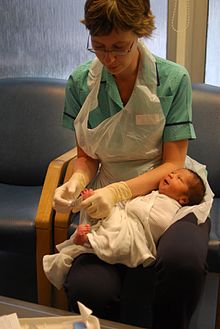
Nurse

Nursing is a profession within the health care sector focused on the care of individuals, families, and communities so they may attain, maintain, or recover optimal health and quality of life. Nurses may be differentiated from other health care providers by their approach to patient care, training, and scope of practice. Nurses practice in many specialties with differing levels of prescription authority. Many nurses provide care within the ordering scope of physicians, and this traditional role has shaped the public image of nurses as care providers.

For more: http://sciaeon.org/public-health-and-healthcare/home

Submit your article at http://sciaeon.org/submit-paper

Contact us at public.health@sciaeonopenaccess.com

Healthy Diet

A healthy diet is a diet that helps to maintain or improve overall health. A healthy diet provides the body with essential nutrition: fluid, macronutrients, micronutrients, and adequate calories. A healthy lifestyle includes getting exercise every day along with eating a healthy diet. A healthy lifestyle may lower disease risks, such as obesity, heart disease, type 2 diabetes, hypercholesterolemia, hypertension and cancer. There are specialized healthy diets, called medical nutrition therapy, for people with various diseases or conditions. There are also prescientific ideas about such specialized diets, as in dietary therapy in traditional Chinese medicine.

For more: http://sciaeon.org/public-health-and-healthcare/home

Submit your article at http://sciaeon.org/submit-paper

Contact us at public.health@sciaeonopenaccess.com

Primary Health Care

Primary Health Care, that is based on scientifically sound and socially acceptable methods and technology, which make universal health care accessible to all individuals and families in a community. It is through their full participation and at a cost that the community and the country can afford to maintain at every stage of their development in the spirit of self-reliance and self-determination. In other words, PHC is an approach to health beyond the traditional health care system that focuses on health equity-producing social policy.

For more: http://sciaeon.org/public-health-and-healthcare/home

Submit your article at http://sciaeon.org/submit-paper

Contact us at public.health@sciaeonopenaccess.com

Public Health Nurses

Public health nurses or community health nurses integrate community involvement and knowledge about the entire population with personal, clinical understandings of the health and illness experiences of individuals and families within the population. Public health nurses work within communities and focus on different areas to improve the overall health of the people within that community.

For more: http://sciaeon.org/public-health-and-healthcare/home

Submit your article at http://sciaeon.org/submit-paper

Contact us at public.health@sciaeonopenaccess.com

Breastfeeding

Breastfeeding, also known as nursing, is the feeding of babies and young children with milk from a woman’s breast.  Health professionals recommend that breastfeeding begin within the first hour of a baby’s life and continue as often and as much as the baby wants. During the first few weeks of life babies may nurse roughly every two to three hours, and the duration of a feeding is usually ten to fifteen minutes on each breast. Older children feed less often. Mothers may pump milk so that it can be used later when breastfeeding is not possible.

For more: http://sciaeon.org/public-health-and-healthcare/home

Submit your article at http://sciaeon.org/submit-paper

Contact us at public.health@sciaeonopenaccess.com

Health Indicators

Health indicators are quantifiable characteristics of a population which researchers use as supporting evidence for describing the health of a population. Typically, researchers will use a survey methodology to gather information about certain people, use statistics in an attempt to generalize the information collected to the entire population, and then use the statistical analysis to make a statement about the health of the population.

For more: http://sciaeon.org/public-health-and-healthcare/home

Submit your article at http://sciaeon.org/submit-paper

Contact us at public.health@sciaeonopenaccess.com

Reproductive Health

Reproductive health implies that people are able to have a responsible, satisfying and safer sex life and that they have the capability to reproduce and the freedom to decide if, when and how often to do so. One interpretation of this implies that men and women ought to be informed of and to have access to safe, effective, affordable and acceptable methods of birth control also access to appropriate health care services of sexual, reproductive medicine and implementation of health education programs to stress the importance of women to go safely

For more: http://sciaeon.org/public-health-and-healthcare/home

Submit your article at http://sciaeon.org/submit-paper

Contact us at public.health@sciaeonopenaccess.com

Vaccination and Immunisation

The principle of immunisation or vaccination is based on the property of ‘memory’ of the immune system. In vaccination, a preparation of antigenic proteins of pathogen or inactivatedm or weakened pathogen are introduced into the body. The antibodies produced in the body against these antigens would neutralise the pathogenic agents during actual infection. The vaccines also generate memory – B and T-cells that recognise the pathogen quickly on subsequent exposure and overwhelm the invaders with a massive production of antibodies.

For more: http://sciaeon.org/public-health-and-healthcare/home

Submit your article at http://sciaeon.org/submit-paper

Contact us at public.health@sciaeonopenaccess.com

Ascaris,

Ascaris, the common round worm and Wuchereria, the filarial worm, are some of the helminths which are known to be pathogenic to man. Ascaris, an intestinal parasite causes ascariasis. Symptoms of these disease include internal bleeding, muscular pain, fever, anemia and blockage of the intestinal passage. The eggs of the parasite are excreted along with the faeces of infected persons which contaminate soil, water, plants, etc.

For more: http://sciaeon.org/public-health-and-healthcare/home

Submit your article at http://sciaeon.org/submit-paper

Contact us at public.health@sciaeonopenaccess.com

Design a site like this with WordPress.com
Get started